
Drinking Hurts Women More Than Men
Wine lies and self-medication delusions we'll be running from until we confront them.

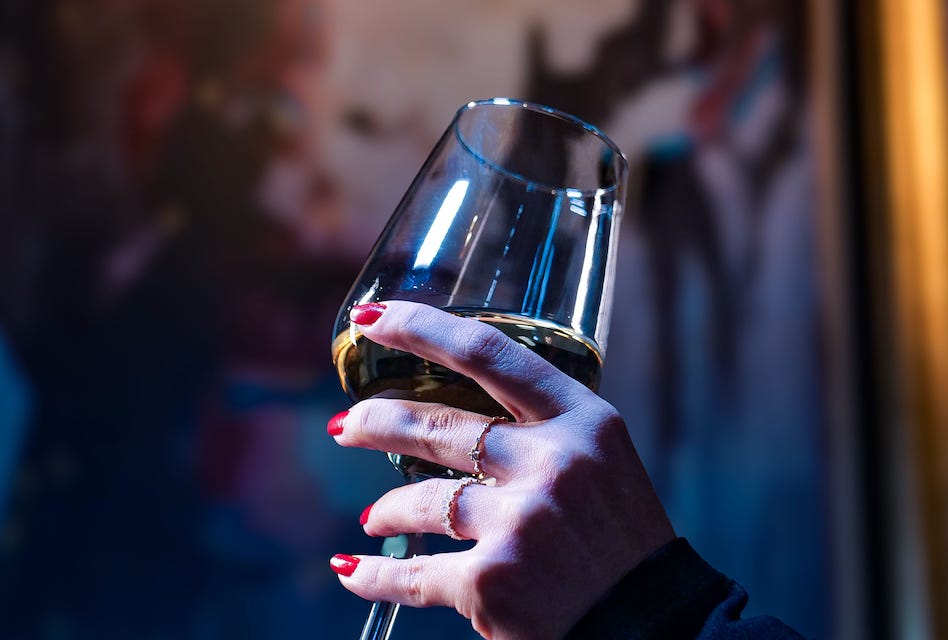
*This Substack focuses on issue of faith, sobriety, motherhood, culture, Big Fertility, politics and more. If today’s topic isn’t your lane, stick around — I circle back through the variety of topics frequently.
I’ll never forget the day my husband told me my issue with alcohol wasn’t so much addiction, but SELF-MEDICATION. I used wine to soothe fear, cope with pressure, cover up deep, personal wounds that felt too difficult to deal with.
Things like my own sexual brokenness from a lifetime of shame and pushing off the truth about my frozen embryos — my babies on ice that I couldn’t bear to think of being raised by someone else. Things like not dealing with the root of my periodic depression or hidden guilt over being a working mom — and a whole lot more.
I couldn’t deal, so I — in a sense — died inside by dumping wine on my heart, soul and mind.
Most women who over-drink are like me. They’re not doing it for fun. We’re usually over-drinking these days because we’re tired, disoriented, and often expected to tolerate lives that make little physiological or spiritual sense.
Alcohol does not create this disorder, but it makes it kinda survivable. And that is precisely the problem….we shouldn’t be living this way (this overscheduled, overstimulated, overwhelmed way) – so, why are we?
In a culture that demands women be endlessly flexible – sexually liberated and emotionally stable, career-driven and maternal, autonomous and compliant – alcohol is the lubricant many have chosen to cope with.
It makes sense.
Alcohol dulls the friction between what women are asked to be and what their bodies can realistically sustain.
Alcohol dulls the friction between what women are asked to be and what their bodies can realistically sustain.
It is not a vice so much as a medication: a socially-sanctioned method of self-numbing.
Women Are Drinking Ourselves to Death
Female drinking has surged over the past two decades, far outpacing men in rates of increase and alcohol-related harm.
That’s one of the statistics that led me to write my recent book, Freely Sober: Rethinking Alcohol Through the Lens of Faith. Today, I’m 5 years sober, but many others are still suffering, and this book is intended to help them, as the principles in it continue to sustain me.
The reasons women struggle with alcohol are often framed in therapeutic language – stress, burnout, trauma – but these explanations are incomplete.
…Stress is not a root cause, but a signal of something deeper.
…Burnout is not an accident, but the predictable outcome of sustained misalignment between body, role, and reality.
…Trauma is legit, but do we just name it and move on like drinking is the inevitable result?
Alcohol is the barrier to the cure.
So, we just stay above water, treading in a pool of our most toxic traits until we die.
Embodied Toxicity
For women, especially, that cost is steep. Female bodies are not scaled-down male bodies, and alcohol has a different, deeper impact on our systems.
It disrupts hormonal systems that regulate mood, fertility, sleep, and emotional resilience.
It raises cortisol, fragments rest, blunts libido, worsens anxiety, and destabilizes the menstrual cycles.
These are not minor side effects, and they strike at the core of women’s embodied functioning in the world each day.
And yet women are often encouraged to drink without these concerns at bay: wine as self-care, cocktails as empowerment, intoxication as sophistication.
The message appears to be: If life feels difficult, the problem is not the structure of that life, but its sedation. The last thing we need as women, in a world that for the vast majority of history has relegated us to second-class citizens, is sedation.
Let me clarify, I don’t think that is the case in the United States today, but we need not let it accidentally slide in that direction either.
When a woman removes alcohol from her list of tools, she regains authentic perception of herself and the world around her. The body, no longer anesthetized (even in small ways), begins to speak again, sometimes inconveniently or painfully, but honestly.
Clarity is dangerous to the world, and a woman who sleeps well, regulates emotionally, and perceives her own limits is less likely to tolerate what harms her or her children.
Sobriety as Empowerment
A woman relying on her nightly wine is less likely to:
Confront a bad marriage
Leave an abusive workplace
Recognize the loneliness of disembedded life.
Let motherhood overrun her, rather than make necessary change.
Alcohol is about enduring where she should be overcoming. It converts legitimate discomfort into a private pathology. There is so much that is understandably hard and needs a solution, but we hide it and excuse it thinking we’re alone — that answer don’t exist. It’s just not true.
That’s what happened me, as I stashed mini-bottles of wine behind the towels in the bathroom closet, sipping them before bedtime routines and silencing my body’s warning signs to get help.
Too much alcohol keeps us from paying attention to the body, our cycles, limits, and needs that modern life treats as inconveniences. But the truth is that peace cannot be chemically induced without consequence.
When we’re awake, away from wine, we can ask better questions:
Why does this life require “escape”?
Why must rest be earned rather than protected?
Why should we override biological wisdom?
Why are we expected to mother our kids without support?
These are foundational, civilizational questions that MAKE SENSE to ask.
Our lives are packed with activity, but empty of deeper meaning. We moved away from our families and communities, and then we wonder why every day of parenting is so hard.
What replaces alcohol is not always obvious. For many women, including myself, it is — in large part — faith, an ordering principle that helps put everything else in its rightful place.
It’s important to know that those who consistently attend faith-based services are less likely to be addicted and healthier in nearly every way – mind, body, and spirit, something I wrote extensively about in my previous book, Reason to Return: Why Women Need the Church & the Church Needs Women. Going to church won’t solve your struggle with alcohol, but it’s a great starting point if you’re not already going.
In positive news, there is a rising trend of women drinking less. This matters because it signals a deeper reckoning and a vital awareness of alcohol’s negative impact on us.
Women are beginning to sense that the cost of numbness and superficial, toxic highs isn’t worth it. Everyone must gauge their own internal sense when it comes to the issue of alcohol. For many women, that temperature check signals it’s time to let go of it or significantly change how they use it. When you know better, you do better.
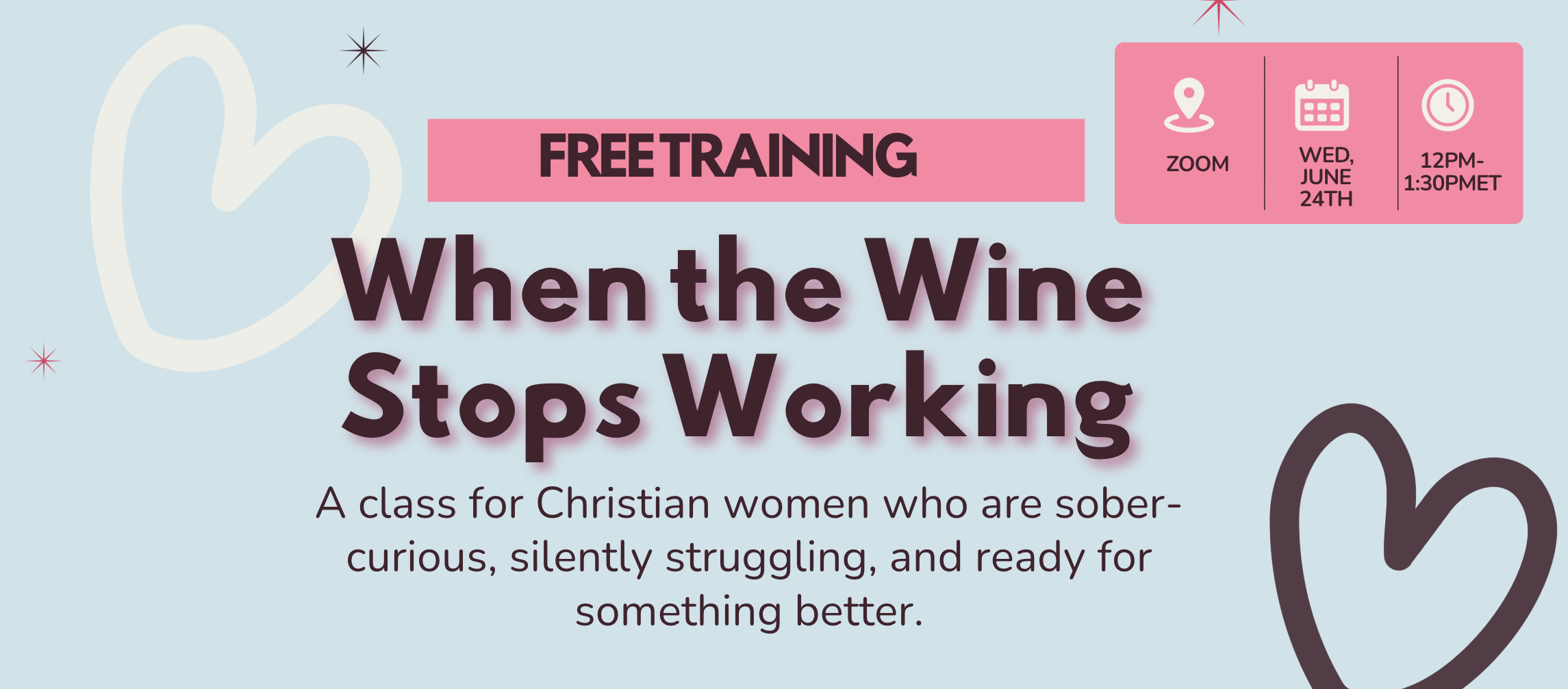
💌 INVITATION: I’d love to invite you to my FREE class next week on this topic — When the Wine Stops Working on Wednesday, June 24th at 12pmET (yes, there’s a replay!).
Just click here to sign up & save your seat.

Other posts of interest:
LIVE: Summer Sobriety Tips with Ericka & Jon

*This Substack focuses on issue of faith, sobriety, motherhood, culture, Big Fertility, politics and more. If today’s topic isn’t your lane, stick around — I circle back through the variety of topics frequently.
I Used to Google This in Secret. Now I'm Talking About It on National TV.

👉 Freely Sober: Rethinking Alcohol Through the Lens of Faith is available now!
The Memories Alcohol Steals From Us

If a rhyme, alliteration, or trend can be attached, you’ve got something. When it comes to booze, there’s always a way to spin it:
\
👉 Interested in learning more about my work? You can download my free guide to sobriety resources at SobrietyCurious.com and grab the book on Amazon.

This is so good Ericka! Alcohol was such a big part of my 20s and early 30s and even though I told myself it was normal to socialize over alcohol, or have a glass or two of wine every night after work, I later realized it had prolonged my ability, willingness, and courage to make some significant life changes. Those changes came anyway, albeit in a much more painful manner. It’s concerning how much alcohol women are consuming, especially mothers.